
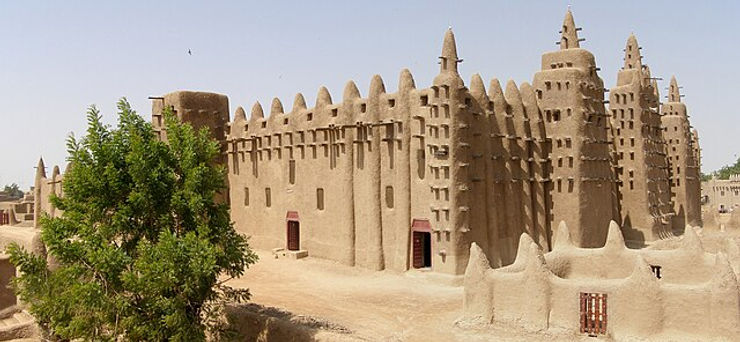
After the fall of the Ghana Empire, the Mali Empire emerged as the dominant state in West Africa. The Mali Empire was a kingdom of the Mandinka people on the banks of the Niger River in West Africa. The state stood where Niger and Mali are today. The empire existed from the 13th to the 17th century and reached the height of its power in the middle of the 14th century when it was a confederation of three kingdoms and twelve provinces.
It was one of the most influential and wealthy empires in African history. It was known for its wealth in gold, its legendary leaders, and its significant contributions to African art, culture, and Islamic scholarship. It still influences West African culture today.
The state covered over 400 cities, towns and villages where many ethnic groups lived. The state reached over 20 million citizens, and the state’s army is said to have numbered 100,000 regular soldiers and 10,000 cavalries, although such figures are difficult to confirm.

Foundation
Sundiata Keita, a legendary figure in West African history often referred to as the “Lion King”, founded the Mali Empire. Sundiata united various Mandé-speaking peoples around the upper Niger River and established the empire in the early 13th century.
The Epic of Sundiata Keita tells the tale of his rise to power. According to the epic, Sundiata was born in the late 12th century in Niani, part of the Kingdom of Kangaba in present-day Mali. He was the son of Naré Maghann Konaté, a local chief, and Sogolon Konaté, a woman known for her spiritual powers.
Despite being discriminated against by his peers and community as a child with physical disabilities, he was known for his intelligence, courage, and leadership qualities.
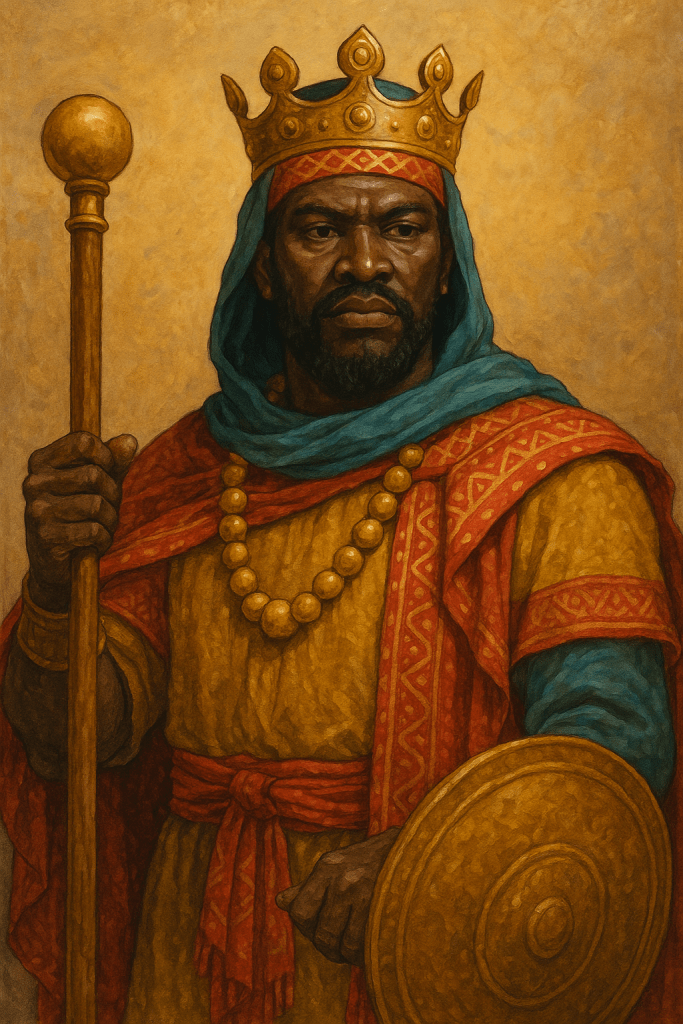
As he grew older, Sundiata overcame his physical disability and began to assert his authority. He gathered supporters, formed alliances with neighbouring kingdoms, and eventually led a successful military campaign to liberate his people from the oppressive rule of the Kingdom of Sosso, led by the tyrannical king Sumanguru Kante. He was proclaimed the first Mansa, or Emperor, of Mali, and he set about consolidating his power and building a prosperous and powerful empire.
Under Sundiata’s leadership, the Mali Empire expanded its territory through conquest and diplomacy, and it became a significant centre of trade and commerce, particularly in gold and salt. Sundiata is also credited with promoting Islam and establishing a government system known for its relative tolerance, justice, and administration.
Sundiata’s reign laid the foundation for the Mali Empire, and he is considered one of the greatest rulers in West African history. His legacy as the founder of the Mali Empire and his legendary story as the “Lion King” continue to be celebrated in West African folklore, literature, and culture.
Height of Prosperity
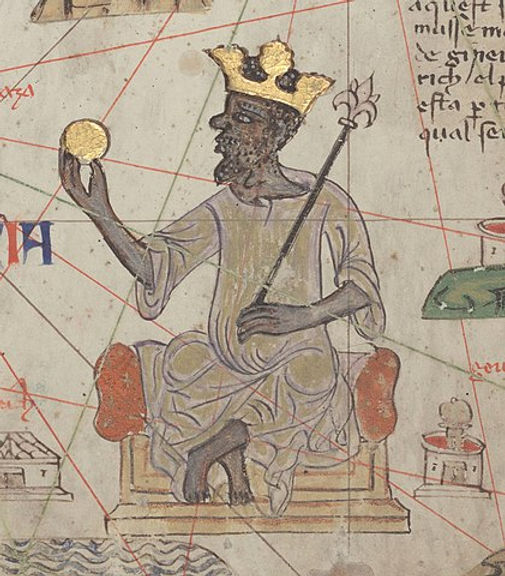
The Mali Empire reached its height of prosperity and influence during the reign of Mansa Musa, who ruled from 1312 to 1337. Mansa Musa is known for his legendary wealth and famous pilgrimage to Mecca, bringing Mali to the attention of the Islamic world and beyond.
Mansa Musa expanded the Mali Empire to its greatest territorial extent during his reign. The empire controlled a vast territory encompassing present-day Mali, Senegal, Mauritania, Guinea, Niger, Burkina Faso, and Ivory Coast. Mansa Musa was a skilled diplomat and military strategist, and he established strong diplomatic relations with neighbouring states, including Egypt, Morocco, and other Islamic powers. His reign helped to enhance Mali’s economic and political power in the region.
One of the primary sources of the Mali Empire’s wealth was gold. Mali was one of the largest producers of gold in the world at that time, and the empire controlled many gold mines and trade routes, allowing it to amass significant wealth through the gold trade. Mansa Musa’s famous pilgrimage to Mecca in 1324, during which he distributed so much gold along his journey that it caused inflation in the regions he passed through, further highlighted the wealth of the Mali Empire.
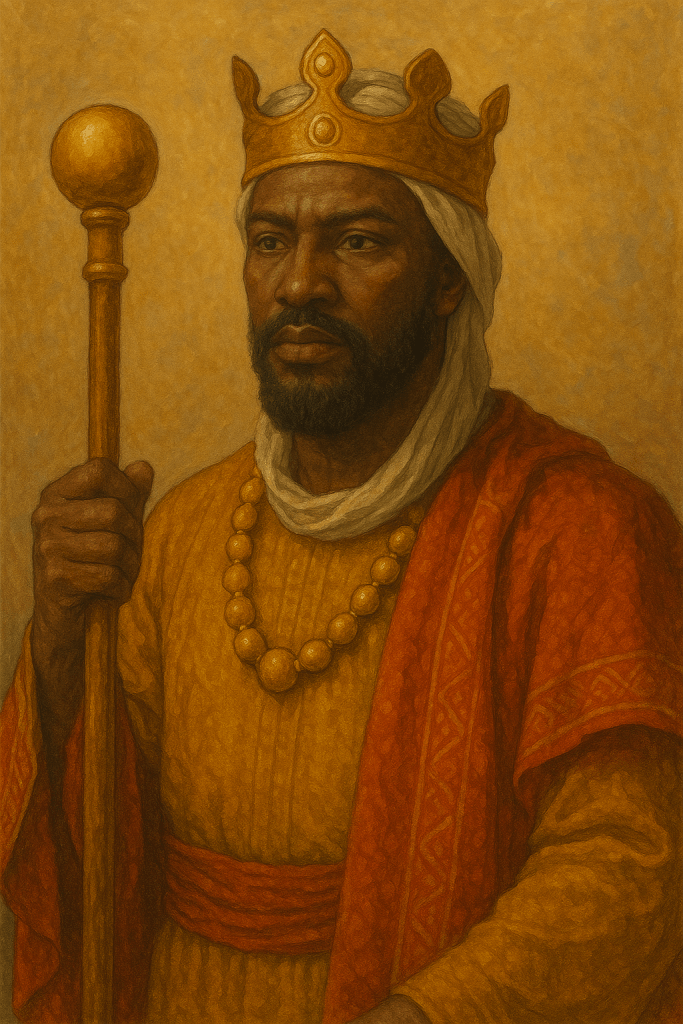
Mansa Musa was also known for his patronage of Islamic scholarship, architecture, and the arts. He sponsored the construction of mosques, madrasas (Islamic schools), and other religious and cultural institutions, which helped to spread Islam and promote intellectual and artistic achievements within the empire.
The Mali Empire was an important trade centre, with gold and salt being the key commodities. Mali’s control over the trans-Saharan trade routes, which connected West Africa with the Mediterranean and other parts of the world, brought significant economic prosperity to the empire. The empire benefited from the trade of other valuable goods, such as textiles, enslaved people, and agricultural products, further contributing to its wealth and prosperity.
During its prosperity, the Mali Empire was renowned for its cultural achievements, including architecture, literature, music, and oral traditions. Scholars and travellers from different parts of the world visited Mali to study, trade, and exchange ideas, contributing to the intellectual and cultural vibrancy of the empire.
The Capital of the Mali Empire
The capital of the Mali Empire was Niani, also spelt as Niana or Nayahni. The location of Niani is believed to be in modern-day Guinea, near the town of Kangaba, even though the precise location of the ancient city is still disputed. It was a strategic and cultural centre of the empire and served as the political and administrative seat of the Mali Empire during its heyday.
Niani was an important city within the Kingdom of Kangaba even before the establishment of the Mali Empire. According to the Epic of Sundiata, Niani was the birthplace of Sundiata Keita. After Sundiata’s victory over the Kingdom of Sosso and the establishment of the Mali Empire, Niani became the capital of the newly formed empire.
As the capital of the Mali Empire, Niani served as the centre of political power and administration. It was the residence of the Mansa, or Emperor, of Mali, who ruled over the empire from the royal palace in Niani. The city was also an important cultural and economic centre, with markets, mosques, and learning centres attracting scholars, merchants, and travellers from around the world.
Niani was strategically located along the upper Niger River, allowing transportation and trade routes to connect the empire with other regions. The city was also known for its impressive architecture, including the royal palace, which was said to be a magnificent structure made of wood, stone, and thatch.
Government
The government of the Mali Empire was a monarchy with a highly centralized system of governance. The ruler of the empire, known as the Mansa, held absolute authority and governed with the assistance of a council of advisors and officials. The kingdom had a well-organized system of governance and taxation, with Islam playing a vital role in its administration.
The Mansa was the supreme authority in the Mali Empire. The title of Mansa was hereditary, passed down from father to son, and the Mansa ruled for life. The Mansa had absolute power and was responsible for making laws, maintaining order, administering justice, and overseeing the empire’s affairs.
Under the Mansa, a council of advisors and officials assisted in the empire’s governance. This council, known as the Royal Council or the Council of Ministers, consisted of appointed officials chosen for their expertise and loyalty. They advised the Mansa on various matters, including political, economic, military, and social issues, and helped administrate the empire.
The Mali Empire was divided into provinces, with each province controlled by a governor or provincial ruler who acted as the local representative of the Mansa. These regional rulers were responsible for maintaining law and order, collecting taxes, and enforcing the policies and decisions of the central government.
The Mali Empire was known for its efficient system of taxation. The empire had a well-organized revenue collection system, with taxes levied on various economic activities, such as trade, agriculture, and mining. The revenue collected was used to support the empire’s administration, including the army’s maintenance, infrastructure construction, and patronage of the arts and culture.
Islam played a significant role in the governance of the Mali Empire. While the Mali Empire was not an Islamic state, Islam was the dominant religion, and many rulers, including Mansa Musa, were devout Muslims. Islamic principles and legal codes influenced the governance and administration of the empire, including the implementation of Sharia law in matters of justice and governance.
The Remarkable Kouroukan Fouga
Kouroukan Fouga, also known as Kurukan Fuga or the Great Charter of the Manden, was a legendary constitution or code of laws established during Sundiata Keita’s reign. It is considered one of the earliest known constitutions in African history and is believed to have laid the foundation for the governance and social structure of the Mali Empire.
According to oral traditions and historical accounts, Kouroukan Fouga was a set of principles or guidelines formulated during a gathering of representatives from different clans and social groups in the Manden (the region where the Mali Empire was later established). This gathering, often called the Gbara or Gbara Siso, was presided over by Sundiata Keita. It aimed to develop a governance, justice, and social cohesion framework in the newly formed Mali Empire.
Kouroukan Fouga is said to have covered a wide range of topics, including the rights and responsibilities of rulers and subjects, the administration of justice, the protection of property and land rights, the regulation of trade and commerce, and the duties of various social groups, such as warriors, farmers, and artisans. It is believed that Kouroukan Fouga emphasized the principles of justice, fairness, and social harmony and aimed to establish a just and equitable society.
While the exact contents of Kouroukan Fouga are not known, as no written record of it has survived, it is considered a significant milestone in the history of the Mali Empire. It is believed to have influenced the governance and social structure of the empire. It is often cited as an early example of a constitutional system of government in African history. It is considered a testament to the advanced political and legal systems in the Mali Empire during its peak.
Mansa Musa Pilgrimage to Mecca
The most well-known event in Mali’s history is the pilgrimage of Mansa Musa to Mecca, which took place in 1324 and is often considered one of the most significant journeys in human history.
Mansa Musa’s pilgrimage to Mecca was a religious journey and a diplomatic and economic mission. As a devout Muslim, Mansa Musa wanted to fulfil his religious obligation of Hajj, the pilgrimage to Mecca required of able-bodied Muslims who can afford it. However, it was also an opportunity for him to expand his influence and establish Mali as a powerful empire on the world stage.
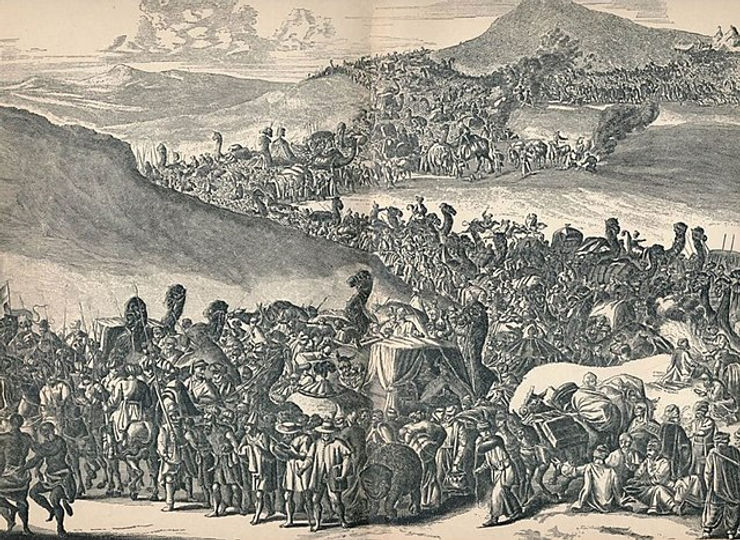
Mansa Musa embarked on his pilgrimage to Mecca with a grand procession that included thousands of people, including his royal entourage, soldiers, scholars, enslaved people, and a vast amount of gold. It is said that Mansa Musa’s caravan was so large that it took months to traverse across the Sahara Desert, and he had to bring along supplies of food and water to sustain his massive entourage during the journey.
As Mansa Musa and his entourage travelled through various territories, they distributed generous amounts of gold to the poor and needy and to the rulers and inhabitants of the lands they passed through. This lavish display of wealth and generosity earned Mansa Musa a reputation as one of history’s most affluent and generous rulers.
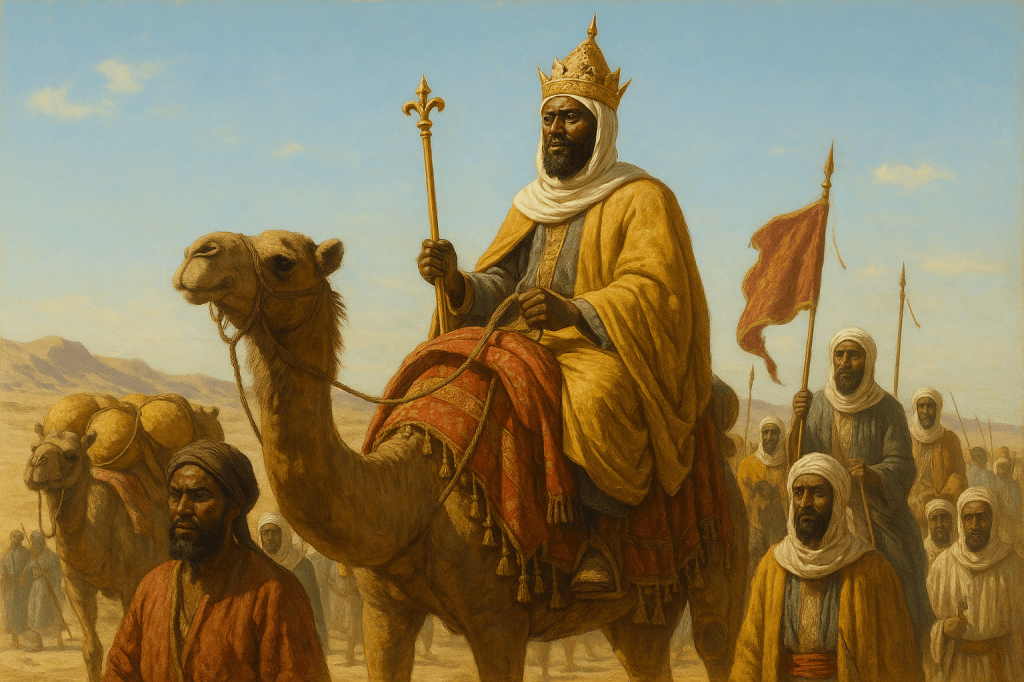
When Mansa Musa finally arrived in Mecca, he performed the Hajj pilgrimage with great devotion, following all the rituals and traditions associated with the pilgrimage. He also met with other rulers and dignitaries from different parts of the Muslim world, forging diplomatic ties and establishing Mali as a powerful empire.
Mansa Musa’s pilgrimage to Mecca significantly impacted the economies of the regions he travelled through. The massive injection of gold into cities like Cairo, Medina and Mecca caused the value of the precious metal to drop dramatically and the price of goods to skyrocket. When Musa realized his mistake, he tried to borrow as much gold as possible at usurious interest on his way back from Mecca. This is the only time that one person is known to have influenced the entire gold price in the Mediterranean region in one fell swoop.
Mansa Musa’s pilgrimage to Mecca was a remarkable historical event, showcasing his religious devotion, diplomatic skills, and vast wealth. It left a lasting legacy, making Mansa Musa and the Mali Empire known worldwide and contributing to the historical and cultural richness of West Africa.
Decline
The Mali Empire experienced a decline after the reign of Mansa Musa. Several factors contributed to the Mali Empire’s decline, including internal struggles, external invasions, and economic challenges.
After Mansa Musa’s death, the Mali Empire faced succession disputes and power struggles among his descendants. This led to instability and weakened the central authority of the empire as different factions vied for control, resulting in political unrest and internal conflicts.
Some provinces within the Mali Empire, such as the Kingdom of Songhai and the Mossi Kingdoms, gradually gained independence and broke away from Mali’s control. This circumstance further weakened the empire and diminished its territorial integrity, as these provinces asserted their autonomy and challenged the authority of the Mali rulers.
The Mali Empire also faced external invasions from neighbouring empires and kingdoms, such as the Berber invasion from the north and the attacks from the rising Kingdom of Songhai from the east. These invasions put pressure on the Mali Empire and weakened its military and economic capabilities.
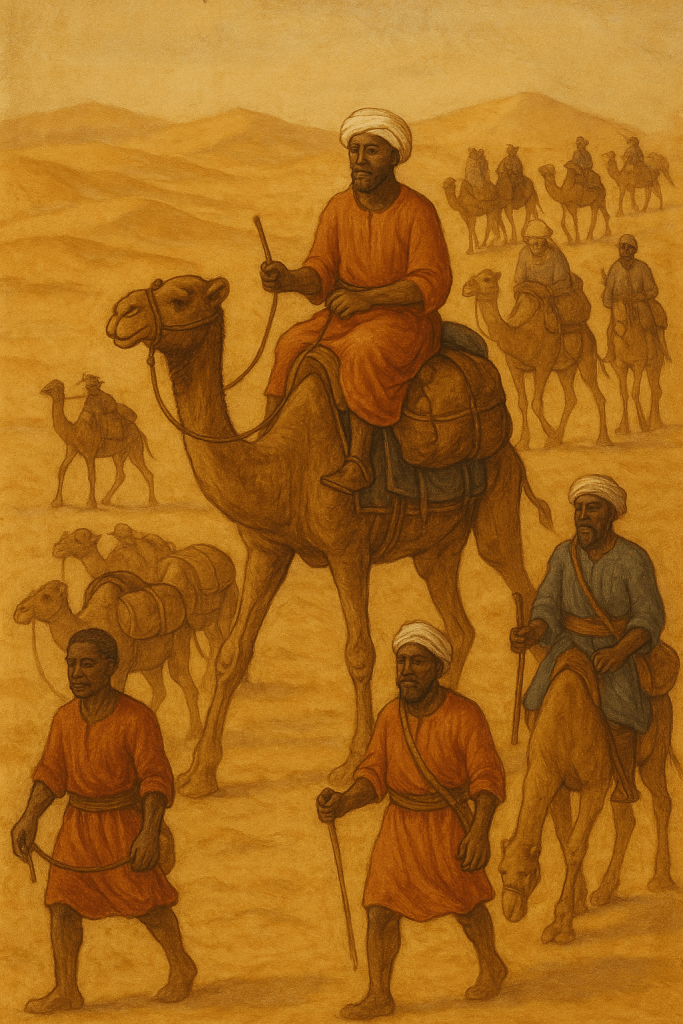
Economic factors also played a part in the decline. The Mali Empire heavily relied on the trans-Saharan trade, particularly the trade of gold and salt. However, new trade routes emerged, bypassing the Mali Empire and diverting trade to other regions. Furthermore, the primary gold mines in Bambouk and Boure gradually depleted, leading to a decline in gold production and revenue for the empire. This further weakened the economy of the Mali Empire and contributed to its downfall.
Changes in social and cultural dynamics within the Mali Empire, including the influence of Islam and the shifting power dynamics among different ethnic groups, also contributed to the empire’s decline. Islam, adopted as the state religion during Mansa Musa’s reign, brought governance and social norms changes that impacted the empire’s stability.
In combination, these various factors contributed to the decline of the Mali Empire, leading to its eventual fragmentation and collapse. The Mali Empire was never completely defeated; it simply fragmented slowly into smaller states.
Despite its eventual decline, the Mali Empire left a lasting legacy in West Africa and beyond. It is remembered for its rich history, cultural and artistic achievements, significant influence on trade and Islam in the region, and legendary leaders such as Sundiata Keita and Mansa Musa.


 The Past World
Leave a comment