
Pope Sergius III (born about 860, died April 14, 911) has the dubious honour of being considered the only pope to have ordered the assassination of another pope. He is also said to have had an affair with a powerful count’s daughter and had a son with her who later became Pope John XI. He also took part in the so-called Cadaver Synod.
Sergius was a pope during a very turbulent time in the history of Rome and the papacy. Different aristocratic power blocs in central Italy fought bitterly over the papacy, both because of the military value of the office and its power over the souls of Christians.
Sergius was in the middle of the fight and the worst character among many. At least, that’s what the legend says.
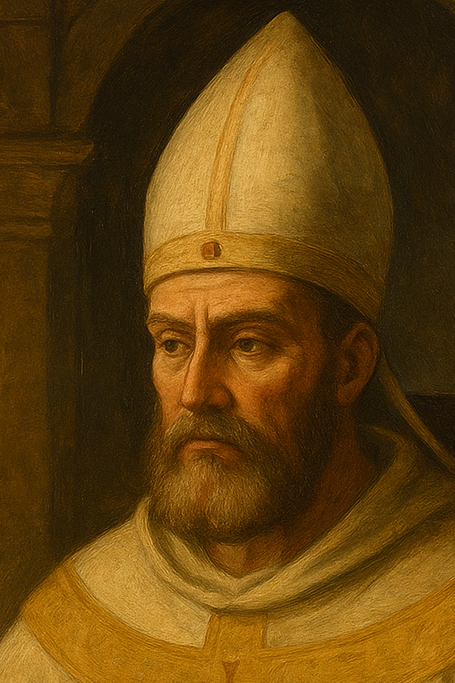
The Story and Context
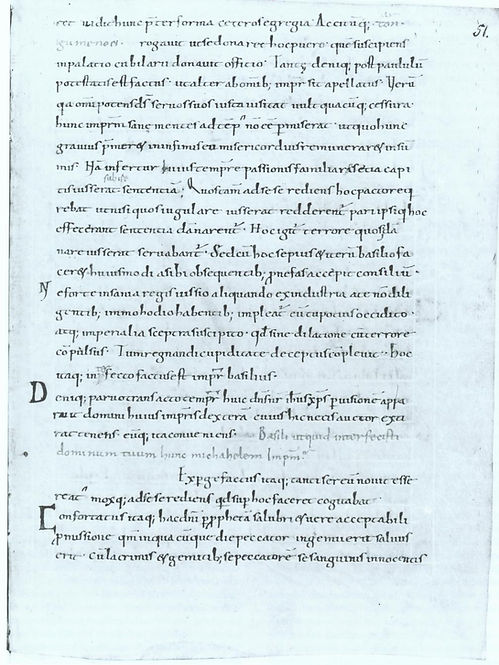
It is often said that the winners write history, which isn’t good if you’re the underdog. Even worse is when your enemies write history. That was the fate of Pope Sergius III. Most scholars agree that, overall, Sergius III was a bad pope in power at a bad time in the history of the Roman Church. But it doesn’t help that his story comes mainly from Liutprand of Cremona.
This Liutprand was bishop of Cremona, diplomat and historian. His work, Antapodosis, which in English could be dubbed “The Revenge”, was written to tell about the evil deeds of King Berengar II and his wife, Willa, whom Liutprand called the second Jezebel. This publication is not a neutral historical work. He wrote it to present a particular historical perspective, including degrading the reign of certain politicians and religious leaders.
Liutprand did not write about the politics of Rome or the papacy in a favourable light. And perhaps rightly so. The ruler of Rome from 902 was Count Theophylact I of Tusculum. Corruption prevailed in the papacy, and Theophylact chose the pope that suited him.
What shocked Liutprand of Cremona and later scholars (16th-19th century) was that Theodora, the wife of Count Theophylact, ruled with her husband and elected popes with him. She even put her alleged lover on the throne. These scholars looked down on female authority and called the administrative structure in Rome a pornocracy. In a pornographic state, the government is in the hands of prostitutes and corrupt officials. The regime was also often referred to as hetaerocracy (rule of courtesans) and hurenregiment (rule of the harlots).
For example, Theodora was called a shameless whore by Liutprand of Cremona and accused of ruling like a man. The couple’s daughter, Marozia, later became a powerful woman. Liutprand speaks of her as a harlot who had a child with the Pope (Sergius). Marozia’s story is fascinating. She became the head of the family after her parents and, for a time, became all-powerful in Rome and ruled over the papacy. She married three times and had many lovers. Her connections with the most powerful men in Italy made her very rich and powerful. She is believed to have been an astute and clever politician. If we believe the stories about her, she had a child with Pope Sergius. Their offspring also became pope. Two of her grandsons later became popes, two great-grandsons and one great-great-grandson—a great dynasty.
Today, historians do not talk about pornocracy or harlot rule. Both because the terms are too loaded for scholarly use, and Theodora’s influence on Theophylact’s reign and her alleged infidelity were probably greatly exaggerated, designed to hurt the family and its descendants. Historians agree that the period was a time of humiliation for the papacy as the pope was under the influence of corrupt men and women. Scholars now use the term “Saeculum obscurum” or “The Dark Age of the Papacy”. This term usually refers to the period that lasted from 904, when Sergius III took office, until the death of Pope John XII in 964.
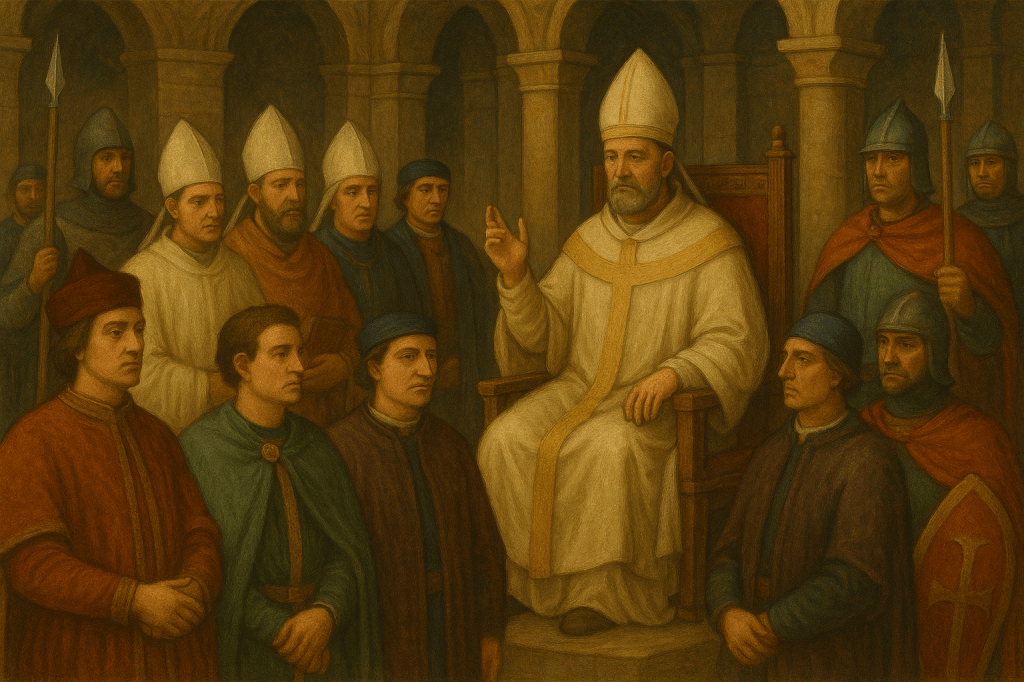
Bishop of Caere
When Lambert of Spoleto exiled Sergius, his official records were destroyed. That is why most sources about Sergius come from his adversaries, especially from the said Liutprand of Cremona. However, it does not change the fact that he is generally not rated highly by historians to this day. He was just a puppet controlled by the powerful Count Theophylact of Tusculum.
Sergius was born around 860 in Rome and died on April 14, 911. He was pope from 904 to 911. We know that his father’s name was Benedictus, and it is generally believed that he was of Roman nobility, although nothing can be verified.
Sergius was ordained deacon by Pope Marinus I and later made bishop of Caere in 893 by Pope Formosus. As with everything at this time, his appointment as bishop was highly political. Pope Formosus supported Arnulf of Carinthia, King of East Francia (Francia Orientalis), in his struggle to be crowned Holy Roman Emperor. On the other hand, Sergius supported Duke Lambert of Spoleto, a sworn opponent of Formosus and Arnulf.
But if Formosus and Sergius were adversaries, why did the former make the latter a bishop? It is believed that Pope Formosus made Sergius a bishop to get rid of him from the politics of Rome. In addition, the church law at that time articulated that it was impossible to be an ordained bishop in two dioceses. Clerics who were already bishops could not become bishops of Rome (popes). Thus Formosus hoped to disqualify Sergius from the papacy.
The diocese of Caere where Sergius became bishop is today called Cerveteri and is a small town on the outskirts of Rome. It is approximately 40 km from the centre of Rome. Perhaps it would have been better to make him a bishop a little further away because Sergius was far from ceasing his meddling in the city’s affairs.
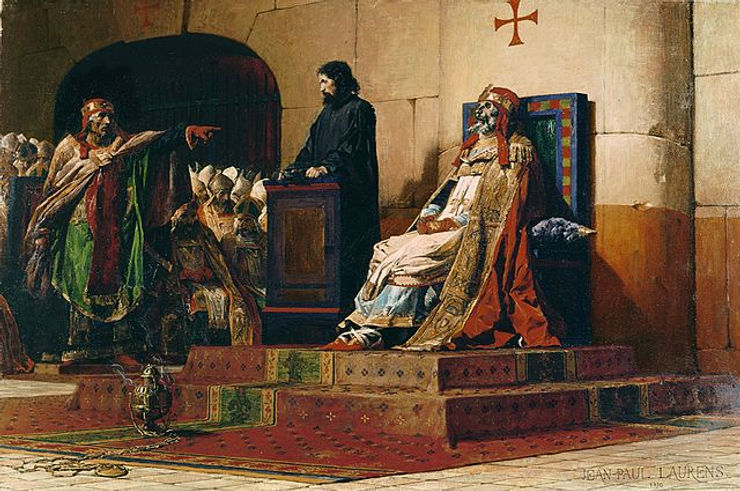
For instance, Sergius was an ardent supporter of Pope Stephen VI, who had the body of Formosus exhumed and put on trial in the infamous Cadaver Synod. Sergius was one of the leading players in the Synod. The appointment of Formosus as Pope and all his orders in office were declared null and void, and his body ended up in the Tiber River. Moreover, the Synod annulled Sergius’s appointment as bishop by Formosus, making Sergius eligible for Bishop of Rome’s office (Pope).
The Romans felt that the participants crossed the line with the Cadaver Synod, and a period of great unrest followed. The behind-the-scenes scheming got complicated and nasty. From the death of Formosus in 896 until Sergius became pope in 904, seven popes and one antipope sat on the throne of Peter the Apostle. The popes of this period were either enthusiastic supporters of Formosus who wanted to restore his work and reputation or were his sworn enemies who wanted nothing more than to trample it down. The conflict became quite fierce.
Pope Sergius
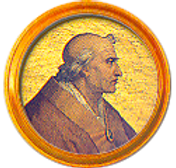
When Pope Theodore II died in 898, Sergius tried to get himself elected pope with the help of his father and nobles loyal to Pope Stephen VI. Sergius was elected pope, but John IX was also elected pope at the same time. John IX received the support of Emperor Lambert and took the throne of St. Peter.
One of the first acts of the new pope was to excommunicate Sergius and his supporters and pardon Pope Formosus. Sergius’ opponents exiled him to his diocese of Caere outside the city walls of Rome. There, Sergius was undisturbed under the protection of Margrave Adalbert II of Tuscany.
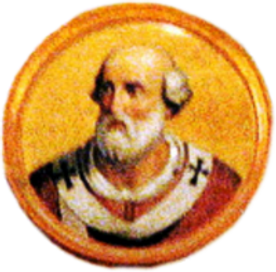
But it was not quiet for long in Rome. Count Theophylact I of Tusculum was a general in the army of emperor Louis the Blind. When the emperor returned home from Rome in 902, Theophylact remained behind with his army and became a pretty powerful player in city politics. In 903, Antipope Christopher expelled the true Pope, Leo V, from Rome by force of arms. Soon after that, Theophylact I intervened and instead ousted Christopher from power. He then asked Sergius to come to Rome to replace Christopher as the pope. Sergius was consecrated Pope on January 29, 904.
Theophylact became the commander of the papal forces and effectively took all power in the city of Rome. He was even elected consul and head of the city according to ancient Roman custom. He likewise became a senator and got his wife and daughter elected as senatrix (female senators), which was very rare. He and his descendants ruled the papacy and papal elections for the next hundred years.
The Murderous Pope
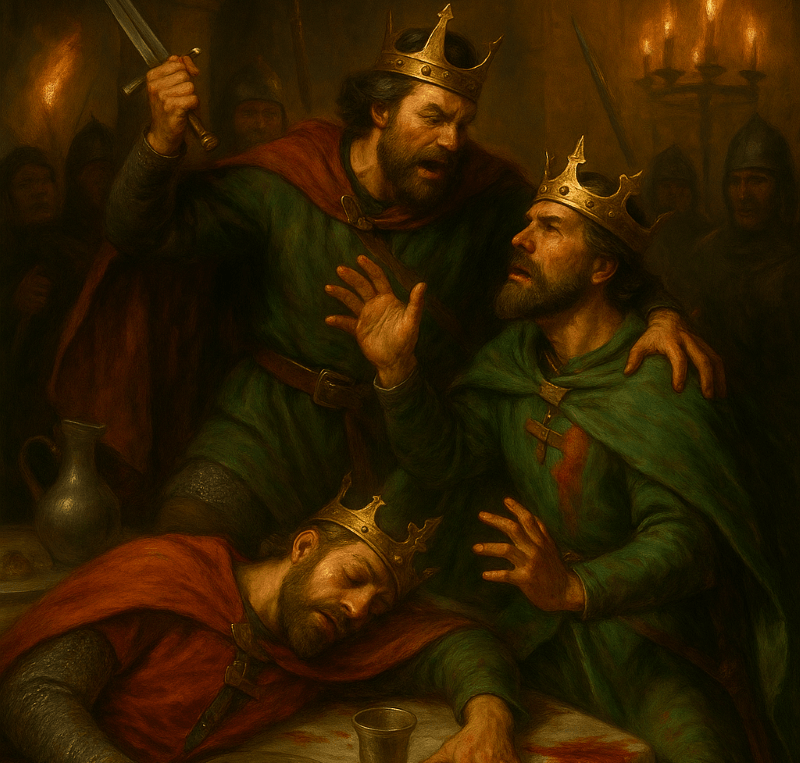
With Sergius becoming a pope, three consecrated popes were alive simultaneously. They were Sergius, Christopher and the exiled Leo V. It was clear to everyone that Sergius would not sit in peace on the throne. The obvious and most straightforward solution was to reduce the number of popes. And it so happens that both Christopher and Leo were strangled during the reign of Sergius. The monk and scholar Hermannus Contractus from Reichenau (1013-1054) claimed, however, that Christopher was allowed to settle in a monastery.
The legend tells us that Sergius himself had both popes killed after he took office in early 904. The most spiteful story says that he committed the murders himself. But we also know that Theophylact had the army and trained killers on his payroll and that Sergius was just a client of his. Some scholars believe it is more likely that Theophylact had the popes killed or at least ordered Sergius to do so. However, history has blamed Sergius for the murders.
The Cadaver Synod is Alive!
As mentioned, Sergius was a staunch supporter of Pope Stephen VI and the Cadaver Synod. When Sergius became pope, the Synod’s actions had already been withdrawn. Sergius, therefore, called a council of clergymen where the acts of the Cadaver Synod were reinstated. All the decisions of Pope Formosus were once again declared invalid. Sergius is said to have persuaded the clergy of this council to pass all the resolutions by bribery and violence. Those who persisted were threatened with exile from Rome.
Sergius’ act of reaffirming the results of the Cadaver Synod was controversial, to say the least, and caused great unrest in the Church. Most controversial was the decision to invalidate all episcopal consecrations of Formosus. Bishops who lived far away from Rome decided to ignore the resolutions of the Sergius council and continued to hold office as if nothing had happened. And in the end, it did them no harm as the decision was reversed after the death of Sergius.
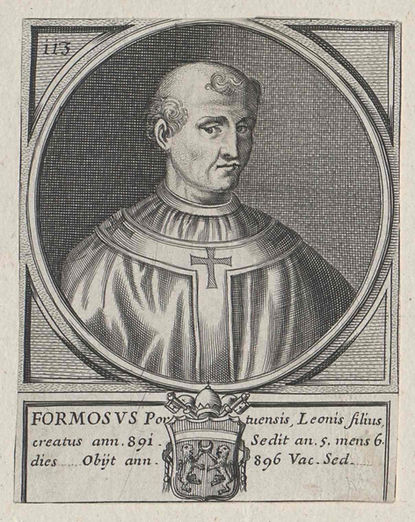
For many centuries many even believed that Sergius called another Cadaver Synod. Had Formosus exhumed again, put him on trial, found him guilty and had his head decapitated. There is no evidence that this happened. After all, Formosus’ body had been thrown into the Tiber after the first trial. In fact, most people believe this account came about simply because Liutprand of Cremona mistook Sergius and Stephen VI in his writing.
Sergius and Marozia
As mentioned before, Count Theophylact of Tusculum placed Sergius on the papacy. Legend has it that Sergius further secured his ties to the family by having an affair with his daughter, Marozia. Theodora and Theophylact are said to have encouraged their relationship. In fact, legend has it that Sergius slept with both mother and daughter.
The outcome of the sexual union between Marozia (aged 12 to 14) and Sergius (aged 44) was a boy who later became Pope John XI in 931. The only source for this is the aforementioned Liutprand of Cremona, who wrote his history fifty years after the events. Other historians, such as Auxilius of Naples and Eugenius Vulgarius, make no mention of this, even though they were Sergius’s contemporaries and found him to be a vile person. Would they not mention such a scandal?

We don’t know anything for sure. Why should Theophylact and Theodora allow their daughter to have a relationship with Sergius? They did not need to tie him to them. He was already committed to them after they made him pope.
On top of that, Marozia was more valuable as a virgin. Then she could be married off to a powerful nobleman. And this is exacly what happened when she was married off to Alberic I of Spoleto in 909. The fruit of the supposed union between the Pope and Marozia was born in 910, a year after the wedding. This fact tells us that Sergius was most likely not the father.
On the other hand, it is bizarre that as the eldest son of a noble family, Pope John joined the Church and the younger brother became the Duke of Spoleto. Usually, the eldest son took the title, while the younger one had a career in the Church. This arrangement undeniably implies that the family knew that John was illegitimate and probably fathered by Sergius. What is true and what is not is uncertain, however. It is difficult to prove or disprove paternity twelve hundred years after the events.
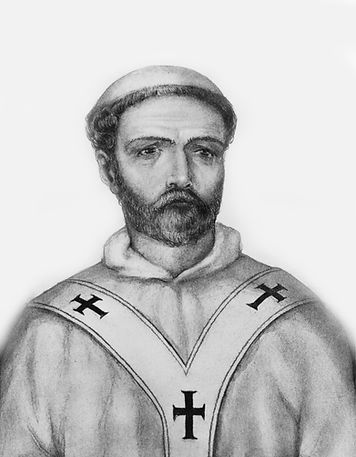
Legacy
Apart from an alleged affair with a teenager, murdering other popes and the scandal surrounding Formosus, Sergius’ reign was uneventful. He was a pope for seven years, which was quite a long time in those years. He died peacefully on the papal throne on April 14, 911 and was buried in St. Peter’s Basilica in Rome.
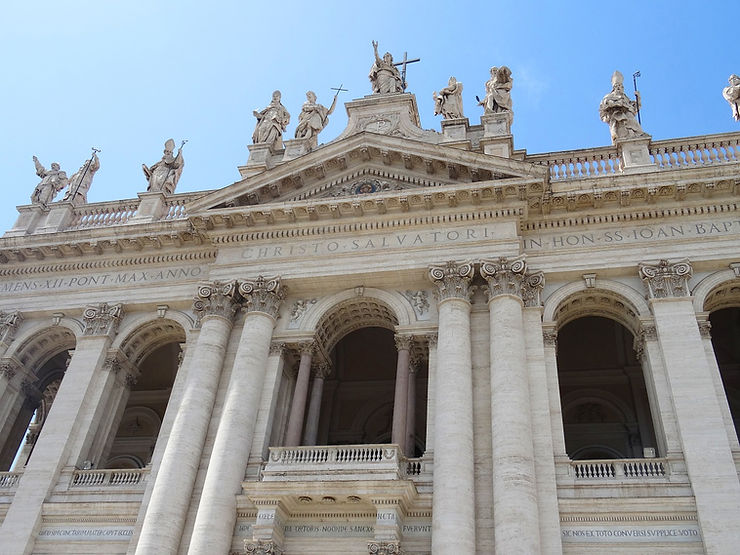
History has neglected Sergius’s other official duties simply because saucy stories survive better. His most famous achievement is that he had the Lateran Basilica rebuilt after it collapsed in an earthquake in 896. The Lateran Basilica is Rome’s cathedral and the Bishop of Rome (the pope) seat. It is the holiest building in the Catholic Church and the only one called an archbasilica. Antipope Christopher, Sergius’ predecessor, had plundered the basilica. Sergius had new objects, pictures and crosses placed in the church and had its walls decorated with frescoes.
Sergius also rebuilt the monastery of Nonantola that the Hungarians had destroyed, invested money in churches that the Muslims had looted, and founded monasteries and churches in the Kingdom of the Franks. But who is interested in that kind stories?


 The Past World
Leave a comment