
Lambert Simnel or Symnell (born circa 1475, died circa 1535) is not a well-known historical name, but his story is interesting. His story is related to the story of the famous “princes in the tower”. Simnel was just a puppet, a commoner who was made to claim the English crown and lead a rebellion against King Henry VII.

Historical Context
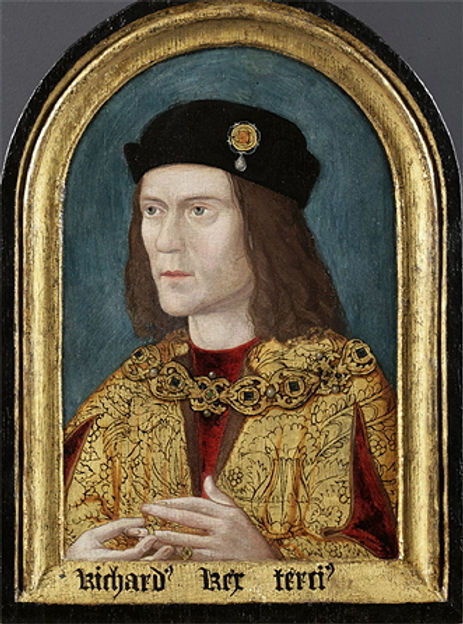
In 1483, Richard Duke of Gloucester imprisoned his two nephews, the uncrowned King Edward V of England, aged 12, and the Duke of York, Richard of Shrewsbury, aged 9, in the Tower of London. On 22 June 1483, Richard declared that he would take the crown as Richard III and had Parliament declare both princes illegitimate heirs. The brothers were never seen alive again, and Richard is widely believed to be responsible for their deaths, although there is no evidence of this. The fate of the princes is still discussed among historians today and is considered one of the most mysterious cases of the Middle Ages.
Four years later, Richard III was killed at the Battle of Bosworth. The battle was the last major battle in the so-called Wars of the Roses and marked the end of the Middle Ages in England. Richard was the last king of the House of York and the last of the Plantagenet Dynasty. He was also the last English king to die in battle. The winner, Henry Tudor, became King Henry VII, the first of the Tudor dynasty, and reigned from 1485 to 1509.
Claim on the Crown
The boy we know as Lambert Simnel was born around 1475. We don’t know his real name. Some contemporary sources even refer to him as John. The name Lambert is most commonly attributed to him, and we will use this name. We don’t know much about the boy’s background. The sources say that his father was either a baker, a craftsman, a furniture maker or even an organ maker. It is clear, however, that Lambert was of low rank.
When Lambert was ten years old, he was apprenticed to a priest named Richard Simon. Sometimes referred to as Richard Symonds, Richard Simons or even William Symonds. For some reason, the priest decided the boy was of royal stock. He began to educate and teach him court manners and the etiquette of royal-born individuals. The boy, therefore, learned good manners and received a good education. He was also considered particularly handsome if contemporary sources are to be believed.

The priest began to spread the rumour that Lambert was a prince who had somehow escaped from the Tower of London. Numerous Yorkists and opponents of Henry VII were willing to jump on that bandwagon. Simon had noticed that Lambert was similar to Edward IV in appearance and decided to take advantage of it. In 1486 the rumour was still going on that the Princes in the Tower (sons of Edward IV) were still alive. So Simon decided to circulate the story that Lambert was the younger prince, Richard Duke of York, and had escaped from the Tower of London.
Later, Simon changed tactics when he heard a (false) rumour that Edward the Earl of Warwick had died in the Tower of London. This Edward also had a claim on the crown as the son of George Plantagenet, Duke of Clarence, who had been the brother of Kings Edward IV and Richard III. All these royally born boys had a stronger claim to the crown than the reigning king. After all, he was completely unrelated to the old royal family. The young Earl of Warwick was the same age as Lambert Simnel, so Simon decided to present Lambert as Earl of Warwick instead of Richard Duke of York.
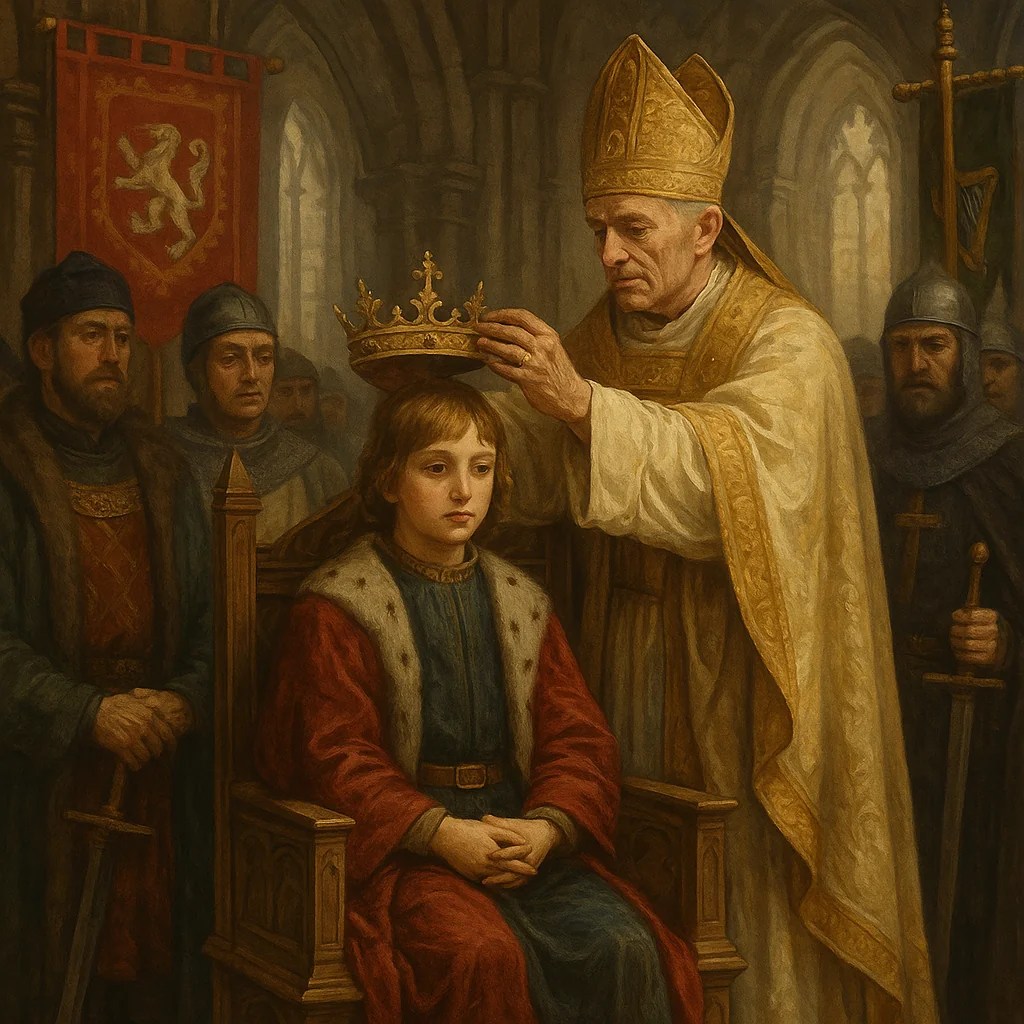
The priest Simon made up the story that Warwick had escaped from the Tower of London and was now under his protection. By doing this, he gained the support of the Yorkists. Simon took Lambert to Ireland, where the Yorkists still had strong support. He was received with honour and dignity and was crowned Edward VI in May 1487. He was then ten years old.
The Battle of Stoke Field
The scheme continued in full force even though King Henry VII fetched the real Earl of Warwick from the Tower of London and paraded him through the streets of London for all to see. But it didn’t matter. Lambert was only an instrument and a justification for the rebellion, which the Yorkists were determined to initiate no matter the evidence. It is pretty clear that even if Lambert Simnel had not been present in the guise of the Earl of Warwick, the Yorkists would have revolted.
Yorkist supporters in Ireland rallied, and the Earl of Warwick’s aunt over in France, Margaret of York, provided 2,000 Flemish mercenaries and had them sailed to Ireland along with some enthusiastic Yorkist leaders. Leading the pack was John de la Pole, Earl of Lincoln (whom Richard III had at one time named as his successor).
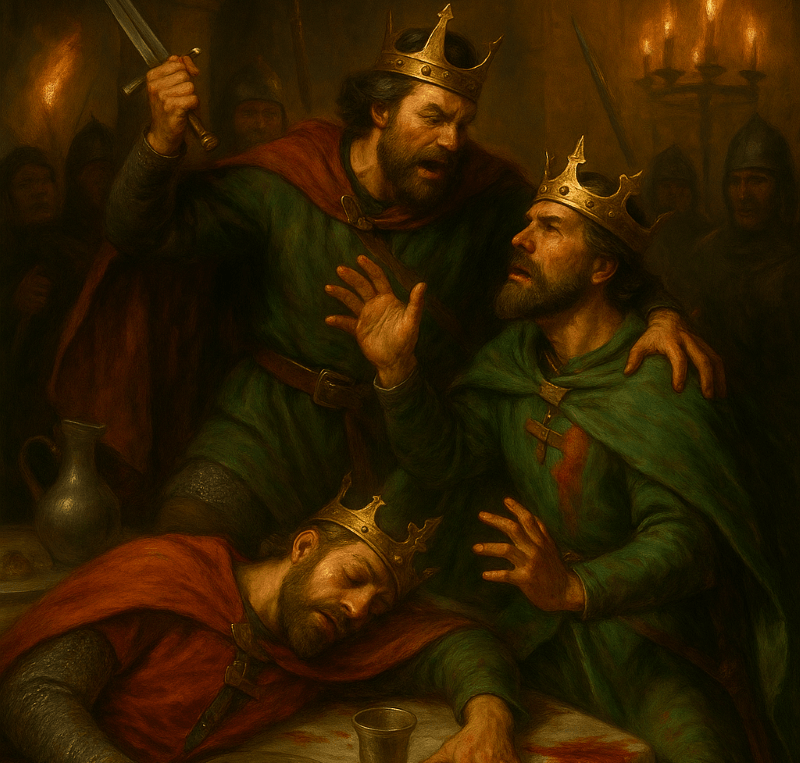
When the army landed in England, they received little support from the local nobles, and few joined the rebellion. Henry VII had gathered his forces and met the rebels on 16 June 1487 at the Battle of Stoke Field in Nottinghamshire, about 3 km southwest of Newark. The king won an overwhelming victory. The king killed Lincoln, and most of the Yorkist leaders and others went into hiding. The priest Simon was captured but escaped execution because of his position as a cleric. He spent the rest of his life in prison.

The Fate of Lambert Simnel
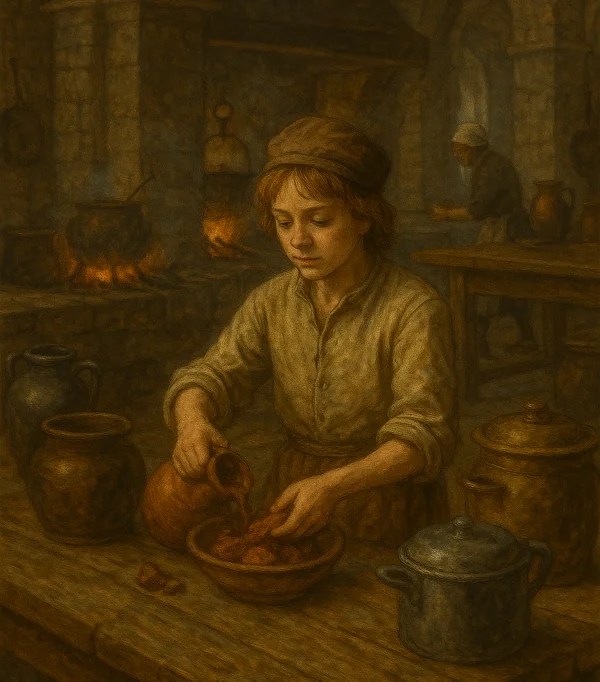
Lambert Simnel was captured. He was later acquitted by the king, who realised the boy was just a Yorkist puppet. The king even got him a job in the royal palace as a low-ranking kitchen worker who did the most menial jobs. If the stories are anything to go by, he had, for example, the assignment to turn a rotisserie with the king’s meat for hours while it cooked.
He later rose to the position of falcon trainer at the court. But otherwise, little is known about his life, and he completely disappeared from world history. He seems to have married and is believed to be the father of Richard Simnel, who was a canon at St Osyth Abbey in Essex during the reign of Henry VIII. Lambert died sometime between 1525 and 1535.
As mentioned before, no one knows the fate of the princes in the Tower, and we can find endless articles, books, TV shows and podcasts speculating about them.
The real Earl of Warwick was kept in the Tower of London until his death. After all, he was a legitimate claimant to the throne and, therefore, a threat to Henry VII. He was executed for treason in 1499 when he either intentionally or unintentionally became involved in the affair of Perkin Warbeck, who also pretended to be Richard of Shrewsbury (the younger brother in the Tower). He was 24 years old at the time, and it is believed that at that point, he had become mentally ill, having never been outside prison walls since birth. The male leg of the Plantagenet family died with him.
King Henry died of tuberculosis on 21 April 1509.


 The Past World
Leave a comment