

Peter Stumpp was a very ordinary German farmer in Bedburg in the 16th century. He was popular and well-liked among his colleagues. Stumpp was later accused of being a mass murderer who practised witchcraft, cannibalism and sorcery. Said to have made a deal with The Devil where he gained the ability to turn into a werewolf. He became known as “The Werewolf of Bedburg”.
Almost Forgotten
There are not many sources about Stumpp. Today we know him mainly through Augustus Montague Summers. Summers was a literary scholar and cleric interested in the occult. He discovered a sixteen-page pamphlet detailing Stumpp’s crimes and execution and published it in 1933 in his book Werewolves in Lore and Legend.
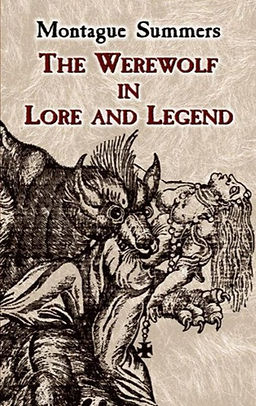
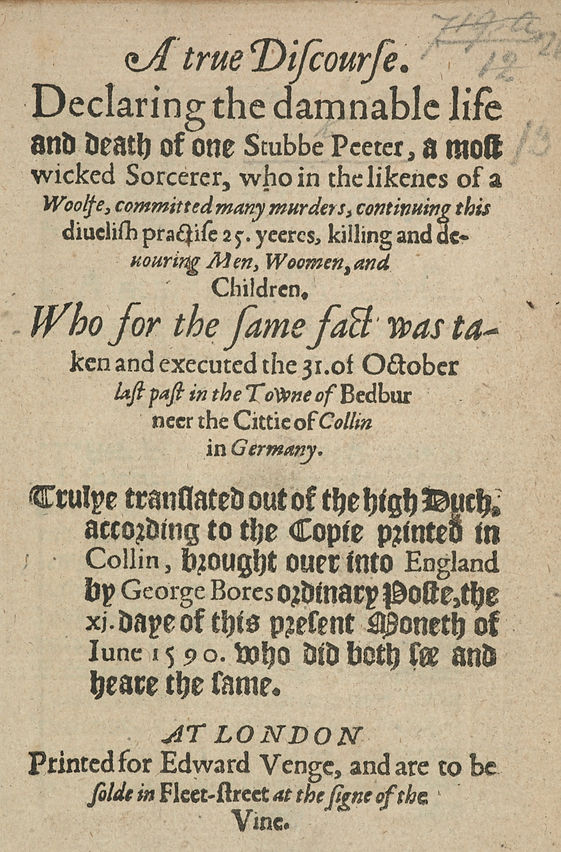
The pamphlet is called “The most damnable life and death of Stubbe Peeter”. Originally published in Dutch in 1590, the booklet was initially translated into English by George Bores, who may have witnessed the events himself. No copies exist in the original language as they were probably destroyed during the 30 Years’ War. Only two copies of the English translation exist, one stored in the British Museum and the other in the Lambeth Library.
We can find additional information on the events in the diary of Hermann von Weinsberg, a city councillor in Cologne. We can also read about the events in illustrated newspapers printed in southern Germany and probably based on the German version of the English pamphlet.
About the Man
Peter Stumpp was born in the village of Epprath, near Bedburg, west of Cologne, in the middle of the 16th century. We don’t know the year of his birth but records mention dates from 1530 to 1550. His name is variously spelt Stumpp, Stube, Stub, Stubbe, Stübbe or Stumpf, which is understandable since he appears mainly in English sources, and they spelt things often as they heard them.
The German word stumpf means stump and is widely believed to refer to the missing front of his left hand. A disability that was undoubtedly serious but did not prevent him from working as a farmer. He was even a pretty well-to-do farmer compared to others in the area. Peter was a widower but had a mistress. He had two children, a son whose name we do not know and a younger daughter called Sybil or Bil.

According to the pamphlet, Peter became interested in the power of darkness and practised black magic, witchcraft, and sorcery as early as twelve. According to the tale, he sold his soul to The Devil when he was about twenty. As a reward, Peter received a belt from The Devil. This is what the English brochure says:
The Devil, who hath a ready ear to listen to the lewd motions of cursed men, promised to give him whatsoever his heart desired during his mortal life: whereupon this vile wretch neither desired riches nor promotion, nor was his fancy satisfied with any external or outward pleasure, but having a tyrannous heart and a most cruel bloody mind, requested that at his pleasure he might work his malice on men, women, and children, in the shape of some beast, whereby he might live without dread or danger of life, and unknown to be the executor of any bloody enterprise which he meant to commit.
The Devil was happy to find someone to carry out his mischief. He gave him a belt that transformed the wearer into a greedy, powerful wolf with large, menacing eyes that glittered like fire at night. The wolf had a large and wide mouth, sharp and scary teeth, a huge body and powerful paws. This description sounds a bit like a Grimm’s fairy tale.
The Werewolf Story
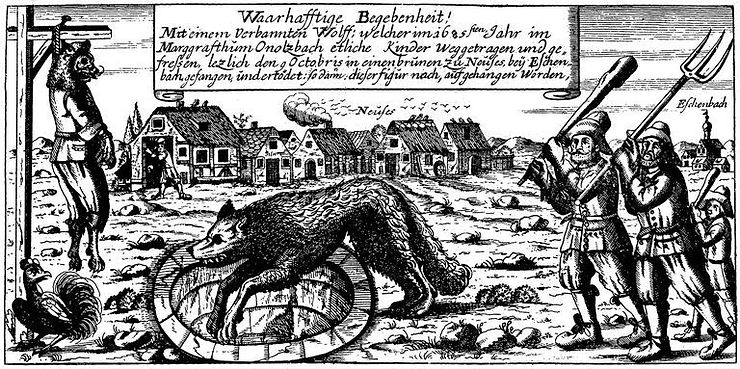
According to the story brought down to us, for the next twenty-five years, the werewolf ravaged the people of Bedburg. Like many other criminals, Peter possessed charisma and social skills. He lived an everyday life and was well-liked in town. He used his charm to lure women alone into the fields or waited for them to leave the village alone. Then he took the opportunity and raped and killed them. He tore out their trachea and tore their joints apart.
If a woman he liked was in a group of women, he would attack the group in the guise of a werewolf, separate them, isolate the victim, and kill her. When the job was done, he took off his belt, transformed into a human, and rejoined society as if nothing had happened. He even greeted the victim’s family with a smile.
According to the pamphlet, Peter killed thirteen young girls and two pregnant women within a few years. And yes, he ate their fetuses. When Peter’s hunt was slow, and he couldn’t find any women or children to kill, he turned to the cattle. He also killed lambs and other livestock and ate them raw.
While the murders took place, he went about his work and home life like a good farmer. However, according to the aforementioned pamphlet, he was not a moral father as his daughter, considered a beauty, gave birth to a child he fathered. And if the rumours are to be believed, he also had an affair with his sister. He also had a mistress at the same time named Katherine Trompin. Katherine was well-liked in town, tall and thin, and considered extremely beautiful. But, of course, such a villain could not get such beauty on his own. The pamphleteer suspects Katherine of actually being an “evil spirit in the form of a woman” sent to Peter by The Devil.
Over time, Peter became so bloodthirsty that he wanted nothing more than to kill. He started killing just for the sake of killing. He became so murderous that he killed his son and ate his brains to his heart’s content. At this point, the pamphlet stops counting the bodies.
The evil deeds did not go unnoticed. These murders were happening over a twenty-five-year period, after all. No one suspected Peter, but it became increasingly difficult to isolate victims as most locals had started travelling around armed in groups. Everyone was scared to death of the monster in the forest, which had long since become a legend.

Finally, the villagers sent a team of men with tracking dogs to hunt the wolf. It is strange why it did take twenty-five years to call out such a team. Anyway, they managed to corner the wolf. Peter saw he was beaten, so he took off his belt and turned into a man in front of the hunters. He was arrested and brought to the authorities. Or so the story goes. Other accounts say that they cornered the wolf, but it escaped. Instead, they ran into Peter as he was walking through the woods. It doesn’t seem clear if the men saw him transform. Maybe he was just the wrong man in the wrong place.
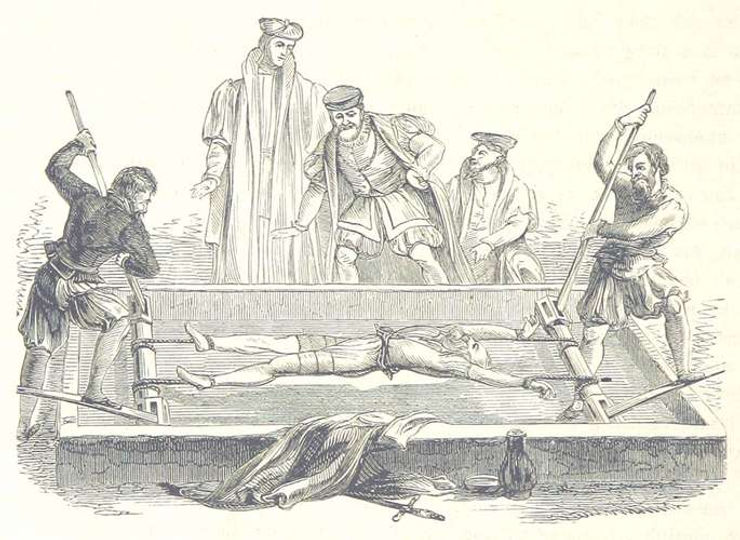
Peter was put on the Rack. The Rack was a torture device where the torturer tied the ankles and wrists away from the body. Then a crank was turned so that the device stretched the whole body. This caused excruciating pain. Full of fear and pain, Peter confessed everything. He admitted to throwing away the belt before he was arrested. Authorities never found the belt and believed that The Devil took the belt and left Peter alone to take the blame.
Trial and Execution
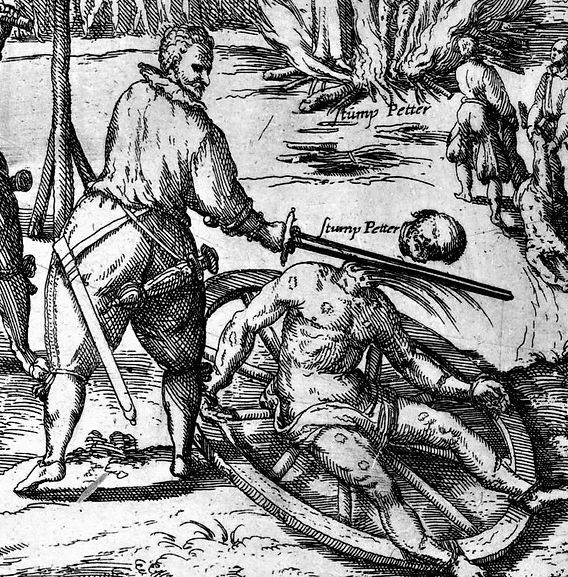
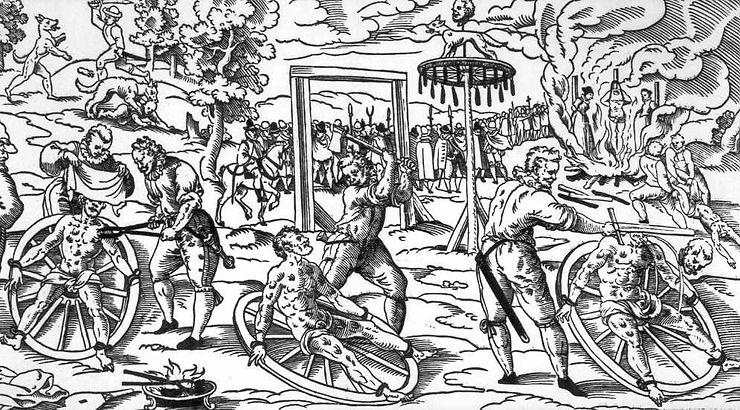
The trial began on 28 October 1589. Peter was found guilty almost immediately. In the presence of fellow citizens and princes of Germany, Peter was led out to the main square in Bedburg on 31 October. He was tied to a giant wheel called a “Breaking Wheel”. His skin was then torn from the bones in various places with red-hot pincers, and the executioner broke his arms and legs with the blunt end of a wooden axe. He was then beheaded and burned. His daughter and mistress were convicted as accomplices. They were flayed, strangled, and thrown onto the pyre until all three burned to ashes.
The townspeople celebrated the end of the terror by erecting a rather unsavoury monument. It was a large pole with the breaking wheel on top. They placed a carved wolf statuette on top of the wheel, and above that, they put Peter’s head.
The Context of the Time
16th century Germany. Time of the Reformation. A time of witchcraft persecution. Time of religious wars. Time of The Devil and werewolves. For us, Peter Stumpp’s case is exaggerated and ridiculous. The victims were brutally killed by a werewolf, with large-scale witchcraft and even cannibalism part of the case. The case was considered unique in the 16th century but not so unbelievable that it could not have happened.
The location, the state of religious matters, and the time’s politics impact the issue. At the time, the Holy Roman Empire is shaking at its foundations. Plagues and religious wars are ravaging the land. Protestantism is on the rise, and its advocates are pushing for their religion to become the state religion. Italian and Spanish mercenaries held Bedburg Castle at this time and wanted to see the Catholic Church restored in the area.
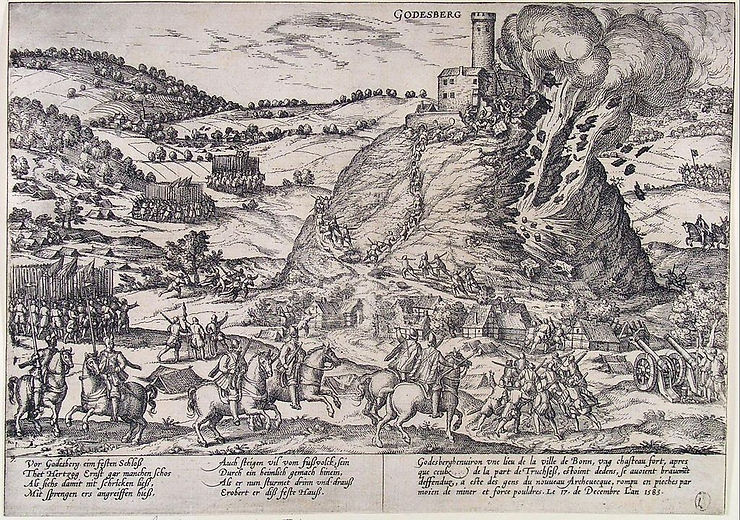
The area around Cologne is in ruins after these religious disputes. These disputes then laid the foundation for the terrible Thirty Years’ War in which eight million people perished. Peter Stumpp operated in this environment of violence, fear, uncertainty and division.
But werewolves? Really? Yes, people at that time believed as much in werewolves as in witches. The peak of the werewolf craze in France and Germany was around 1590. Societies of the 16th century feared these phenomena. It was only logical to them that a man who is a werewolf would also dabble in black magic and sorcery. But did these creatures exist? Or were they just hysteria and imagination fostered in times of religious strife and social breakdown?
The primary source of this case is the pamphlet translated from German to English. Today, we find it far-fetched that everything happened as it says. However, other sources confirm that something like this happened. Several known individuals recount these events. It is widely believed that the story of Peter Stumpp is, to some extent, part of historical truth.
What Happened?
Several theories have been put forward to explain the events. The pamphlet dealing with the case of Peter Stumpp was written in emotional language with a religious twist to have the greatest impact on the reader. It is, therefore, not unlikely that religion played a role in Peter’s fate.
Peter had just converted to Protestantism. In times of uncertainty, it’s good to have a scapegoat. Peter was a protestant in a country ruled by Catholics. Peter was a warning to others who intended to convert to Protestantism. Protestants like Peter were dangerous, making deals with the Devil and killing children. This theory asserts that the Peter Stumpp case was a political trial, and Peter’s crimes are exaggerated.
Some go further and say that it was pure religious persecution. Peter was completely innocent. He was merely in the wrong place at the wrong time. He only confessed in the hope of a lighter sentence or because of fear of torture. Perhaps the deaths were simply the result of a real wolf or an attack by a large animal. There are examples of this.
Another theory about Peter’s behaviour is that he was simply insane. Based on what we know, Peter’s behaviour could be caused by depression, epilepsy, various forms of psychosis or even so-called clinical lycanthropy. Then the patient believes that he can turn into an animal. Lycanthropy is a manifestation of schizophrenia and is associated with psychosis, hallucinations, disorganized speech patterns, and grossly disorganized behaviour. Such examples have appeared in our time.
Was Peter delusional and admitted to crimes he did not commit? Or had he committed the crimes under the delusion that he was an animal? If it was psychosis, we could ask the same questions.
But what about social status? He was well-liked in the community, so it is doubtful that he was ostracized from society. His success as a farmer may have caused jealousy among certain locals, who then started rumours of incest and possible guilt. Peter’s physical disability may also have fueled this bad talk among his adversaries. People with disabilities were generally not esteemed in the 16th century. Especially not if this disabled person did better than others.
But perhaps Peter was just a brutal mass murderer like we regularly read about nowadays. Just a “normal” man possessed by bloodlust. In the 16th century, this was not considered likely. The person must have made a deal with the Devil or something supernatural to behave like this. It was the only logical way to explain such evil deeds. Isn’t it possible that the so-called werewolves and vampires of the past were the same as what we call serial killers today? But if Peter was just a bloodthirsty mass murderer, why did he make up the story of the belt, black magic and a deal with The Devil?

And finally, maybe Peter was simply a werewolf. Of course, there is no evidence to support this theory. But there is also no evidence for other theories regarding Peter Sumpp. There are regular reports of people having found skulls that are supposed to prove the existence of werewolves. Others believe they have seen werewolf-like creatures. Those who believe in supernatural forces can explain Peter Stumpp this way.
There is no evidence that Peter was a murderer apart from his confession made under torture. Maybe Peter was a sick unscrupulous mass murderer. Perhaps the whole thing came about for political or religious reasons. And maybe, despite our disbelief, he was just a man who made a pact with the devil and could transform himself into a wolf. Maybe Peter’s murders are just some combination of all these theories.


 The Past World
Leave a comment