
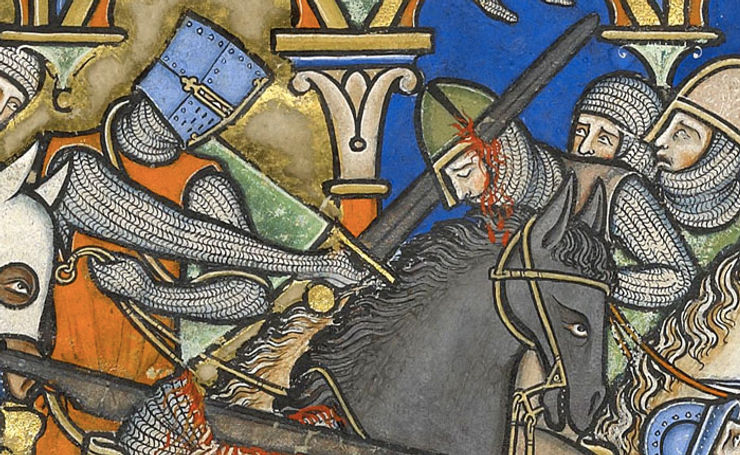
Scholars have long debated the exact year of the Middle Ages. However, attaching specific dates to the beginning and end of periods is always challenging. Besides, eras are just the brainchild of scholars. The people who lived during this time did not see themselves moving from one era to another.
The term Middle Ages appeared in the 17th century when writers began to describe a certain period of history as “medium aevum”. They thought of this period as the interval of decline between the great Roman Empire and the progress of their own time (the Renaissance). They saw the Middle Ages as a time without education, culture or improvement. Today, scholars are generally not so negative, but they still call it the Middle Ages for definition.
It is most convenient to think of the Middle Ages in Europe as thousand years between 500 and 1500. This is an extended period, so it has often been divided into three shorter periods:
- Middle Ages (to 1066)
- High Middle Ages (1066 to about 1250)
- Late Middle Ages (from 1250 to about 1500).
When do the Middle Ages begin?
Many scholars have their ideas about when to date the beginning of the Middle Ages. However, most people believe that the Middle Ages began with the fall of the Western Roman Empire on September 4, 476, when the 16-year-old Roman emperor Flavius Romulus Augustus (often known as Augustulus) was deposed and no emperor was chosen in his place.
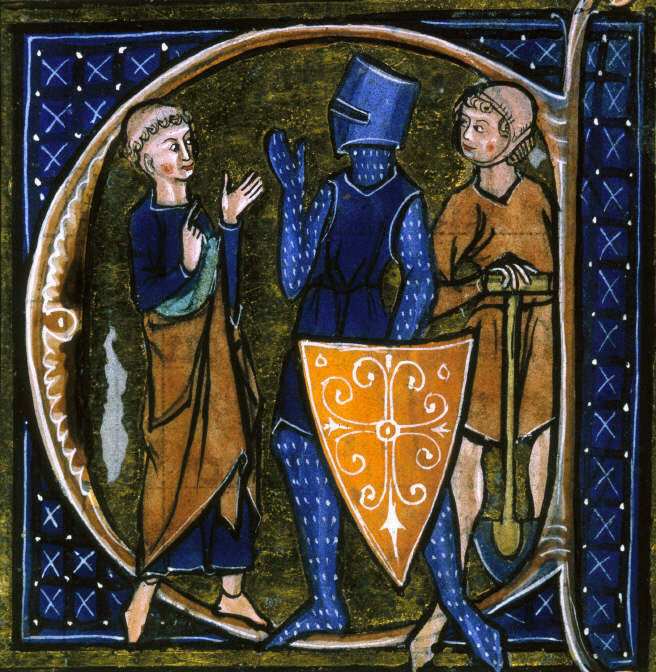
Others argue that the Middle Ages began much earlier, or when Emperor Constantine converted to Christianity around 312. The following year, he issued the Edict of Milan, which called for tolerance of Christians and other religions. In the past, the Roman Empire often persecuted Christians. With this decree, the Christian faith managed to grow and prosper, and a new phase in the history of Europe began.
Another theory is that the Middle Ages began with the spread of Islam in the Mediterranean around the year 700. Islam was gaining control over North Africa, the Iberian Peninsula and parts of Italy at that time. At the same time, the disruption of trade between southern and northern Europe forced people in the north part of the continent to adopt a medieval agricultural economy.
When did the Middle Ages end?
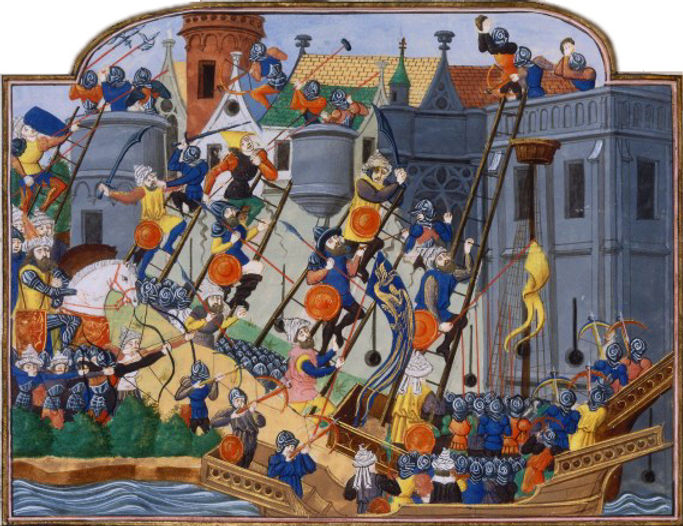
Historians also differ on when the Middle Ages ended. The medieval period slowly slipped into the Renaissance, but academics always need a more precise definition. Many mention the year 1453 when the Eastern Roman Empire (Byzantine Empire) fell and the army of the Ottoman sultan Mehmed II conquered Constantinople, thus ending the long history of the Roman Empire.
Other scholars usually mention the year 1492 when Christopher Columbus sailed to America. A new era of exploration, trade and colonisation began and fundamentally changed Europe.
Others say that the beginning of the end of the Middle Ages was when Martin Luther hung the 95 Articles on the door of the church in Wittenberg. This action led to the Reformation in many European countries and changed the social order of Europe, which the Catholic Church had previously controlled.


 The Past World
Leave a comment