
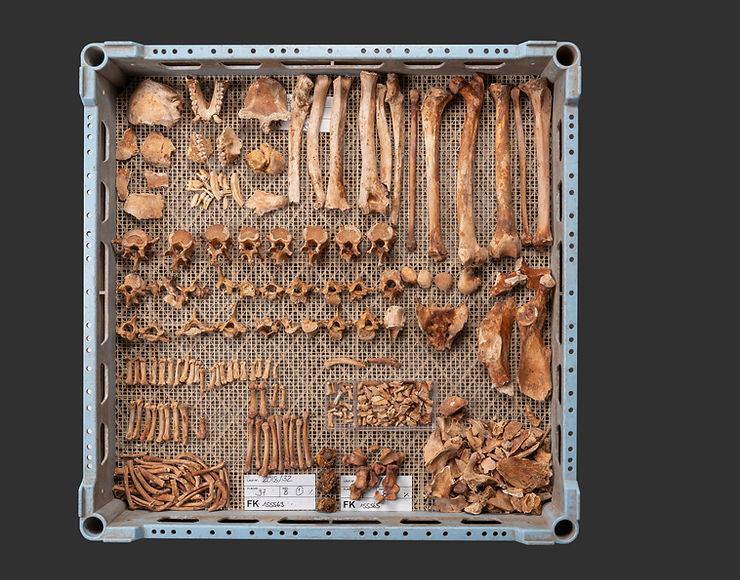
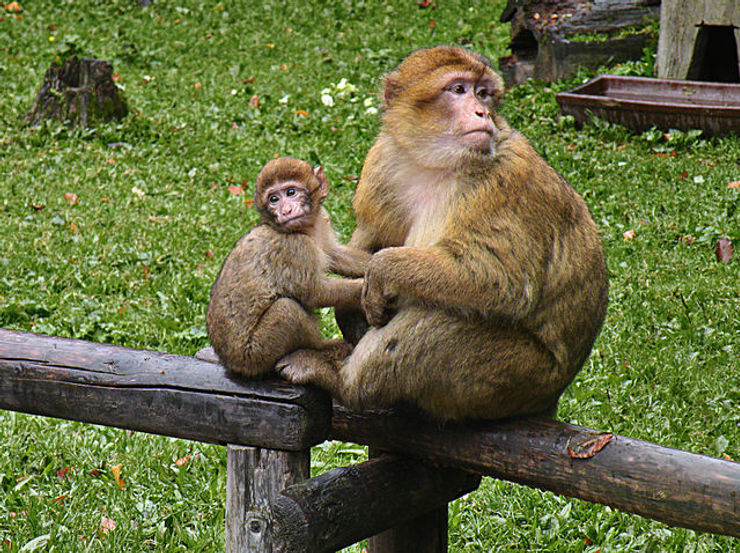
An intact skeleton of a Barbary macaque monkey (Macaca sylvanus) was discovered in a medieval toilet in Basel, according to a report on the Archäologische Bodenforschung Basel-Stadt website. Archaeologists talk about a remarkable find.
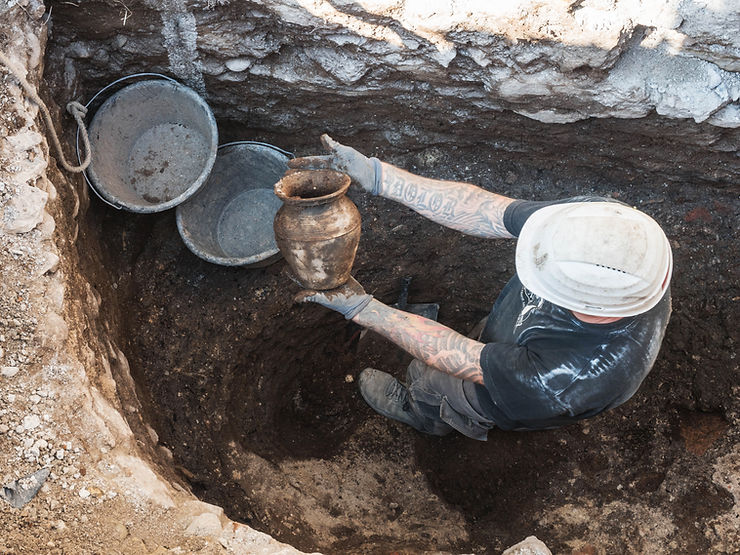
The skeleton found was at the base of a tower that was part of the town’s inner fortress wall. The city is building a modern parking lot between the art museum and the city’s archaeological museum. Based on other finds in the area, scientists estimate that its owner put the monkey remains there in the 15th century.
After the city built the outer fortress wall, the tower lost its function. It was used as a toilet and a ditch for the household waste of the town’s wealthy citizens.
Experts from the University of Basel and the Natural History Museum have confirmed the remains are the bones of a male Barbary macaque. The monkey was fully grown, five to eight years old, and powerfully built, but some of the bones showed that they had previously been broken and regrown, and something had crushed its teeth. The status of the remains indicates, therefore, the mistreatment of the monkey.
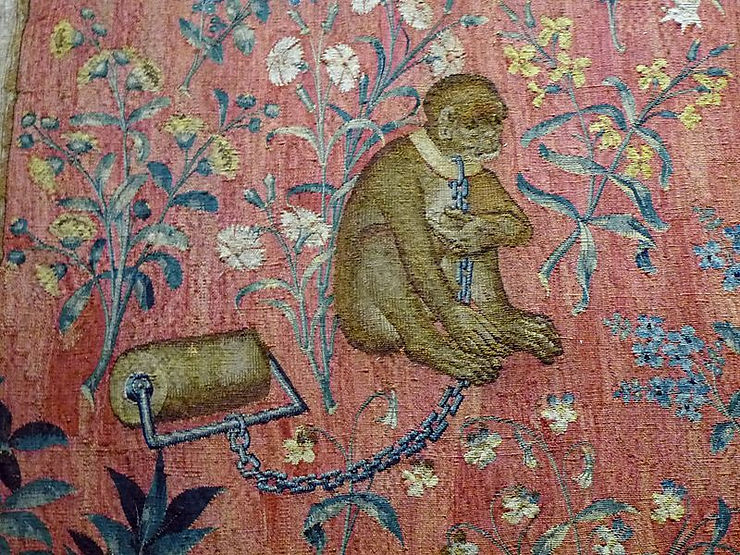
The importation of monkeys to Europe began in the 12th century. It was popular for wealthy clerics and humanist scholars to keep monkeys as pets in the late Middle Ages and early modern times. Barbary macaques are strongly built, do not require warm bedding, and do not need a lot of nutrition. However, they were unsuitable as a pet and photos from this time show that their owners kept the animals in chains.
It is not possible to prove who owned the monkey. However, based on where the archaeologist found it, the monkey was likely owned by Heinrich von Bernheim. Bernheim was a scholar, one of the university’s founders in the city, and held an important position at the Synod of Basel that lasted from 1431 to 1449 (Council of Basel). He had many connections abroad and enough funds to buy monkeys, which were very expensive.
The archaeologists believe this is one of the oldest and most complete skeletons of its kind in Europe. Up till now, only five such skeletons had been discovered.


 The Past World
Leave a comment